

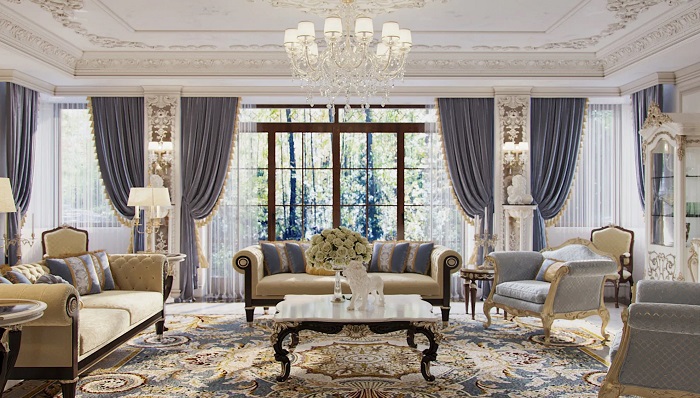
Luxury interiors are no longer about excess. Today, a high-end home is defined by precision, restraint, and the quiet confidence of well-chosen details. The conversation has shifted away from surface-level opulence toward something far more nuanced: how a space feels, how it ages, and how every element contributes to a coherent story.
From textiles underfoot to the curve of a chair leg, details are no longer decorative afterthoughts. They are the architecture of atmosphere. This article explores how contemporary luxury is built through material intelligence, thoughtful furniture design, and the often-overlooked elements that separate a beautiful interior from an exceptional one.
One early indicator of this shift can be seen in flooring choices, particularly in the renewed interest in heritage textile craftsmanship such as de poortere rugs, where traditional weaving meets modern interior sensibility.
The New Definition of Luxury: Intentional, Not Loud
For decades, luxury interiors relied on visual signals. Glossy finishes, heavy ornamentation, and recognizable brand statements. Today, those cues feel increasingly dated. Modern high-end homes communicate status through intention rather than display.
This evolution is driven by several forces:
- A global design culture that values authenticity over trends
- Clients who are better informed and less impressed by logos
- A desire for spaces that feel personal, not staged
Luxury has become quieter, but also more demanding. When design is stripped of excess, every choice matters more. Materials must perform. Proportions must be precise. Craft must be evident without being announced.
“True luxury is not what you notice immediately. It is what continues to reveal itself over time.”
Textiles as the Emotional Foundation of a Space
Textiles are often the first point of physical contact with an interior. They absorb sound, soften light, and influence how a room is experienced emotionally. In high-end homes, textiles are not decorative layers added at the end. They are foundational.
Rugs, in particular, play a critical role. Beyond anchoring furniture, they establish rhythm and scale. A well-chosen rug can calm an otherwise complex space or introduce tension into a minimal one.
Why Material Depth Matters
The difference between an average textile and a refined one is rarely obvious in photographs. It is felt through density, texture, and movement. High-quality rugs and fabrics interact with light differently throughout the day. They develop patina instead of wear.
Designers increasingly prioritize:
- Natural fibers with character and irregularity
- Color palettes that shift subtly rather than dominate
- Weaving techniques that add depth without visual noise
These choices contribute to a space that feels grounded rather than styled.
Furniture as Architecture
In contemporary luxury interiors, furniture is expected to do more than fill space. It must hold its own architecturally. The best pieces feel inevitable, as if the room was designed around them.
This approach favors form over embellishment. Clean lines, thoughtful proportions, and an emphasis on negative space define modern high-end furniture. The craftsmanship is evident in joinery, balance, and how materials meet.
Custom vs. Collectible
High-end homes often blend custom-made furniture with collectible design pieces. The balance between the two is crucial.
Custom elements provide:
- Perfect scale for the space
- Material continuity across the interior
- A sense of quiet cohesion
Collectible pieces introduce:
- Personality and narrative
- A sense of cultural literacy
- Visual punctuation within restrained interiors
Neither approach works alone. Luxury emerges in the dialogue between the bespoke and the curated.
The Power of Transitional Details
What truly distinguishes a high-end home is not the headline elements, but the transitions. The junction between wall and floor. The edge of a countertop. The way a textile meets wood or metal.
These moments require discipline. Poor transitions expose shortcuts. Refined ones disappear into the whole.
Designers pay close attention to:
- Shadow gaps instead of decorative trims
- Flush surfaces that emphasize geometry
- Consistent material thicknesses across rooms
When done well, these details create a sense of calm that is difficult to articulate but immediately felt.
Lighting as a Material
Lighting in luxury interiors is no longer treated as a technical necessity. It is considered a material in its own right. One that shapes space as much as stone or fabric.
Rather than relying on statement fixtures, high-end homes use layered lighting strategies:
- Architectural lighting integrated into ceilings and walls
- Soft ambient sources that eliminate harsh contrasts
- Accent lighting that highlights texture rather than objects
This approach allows materials to speak. Textiles gain depth. Wood reveals grain. Surfaces appear richer without becoming reflective.
“Light does not decorate a space. It completes it.”
The Return of Craft in a Digital Age
As interiors become more minimal, the value of craft increases. In a world dominated by digital perfection, hand-finished elements bring warmth and credibility.
This does not mean rustic or traditional. Craft in contemporary luxury is subtle. It appears in the slight irregularity of a glaze, the softness of a hand-finished edge, or the depth of a woven textile.
These imperfections are not flaws. They are evidence of human involvement, and they age gracefully.
Designing for Time, Not Trends
A truly high-end home is designed with time in mind. Not just how it looks today, but how it will feel in ten or twenty years.
This long view influences every decision:
- Neutral foundations that allow evolution
- Materials that patinate instead of degrade
- Furniture that can be reupholstered rather than replaced
Trends may inform details, but they do not dictate structure. Luxury lies in longevity.
Details as a Language
High-end interiors communicate through details. Not loudly, but fluently. Each material, texture, and proportion contributes to a larger conversation about how the space is meant to be lived in.
From the tactile presence of textiles to the architectural clarity of furniture, luxury today is defined by coherence and care. It is not about adding more, but about choosing better.
In the end, the most refined homes are not those that impress instantly, but those that continue to reveal their intelligence and depth, long after the first glance.